

Intermittent Fasting for Women Over 40: How to Lose Weight Without Stress
This post may contain affiliate links. Read my full disclosure here.
Intermittent Fasting for Midlife Women: A Simple, Sustainable Approach to Fat Loss – Struggling to lose weight in midlife? Discover how intermittent fasting can help women over 40 burn fat, balance hormones, and boost energy—without extreme dieting.
If you’ve been trying to lose weight in your 40s or 50s and feel like what used to work… just doesn’t anymore—you’re not imagining it.
Hormonal shifts, increased stress, and changes in metabolism can make fat loss feel frustrating, especially around the midsection. That’s where intermittent fasting can be a powerful (but often misunderstood) tool.
The key? It doesn’t need to be extreme to be effective.
In fact, for midlife women, a more gentle, personalized approach is often what works best.
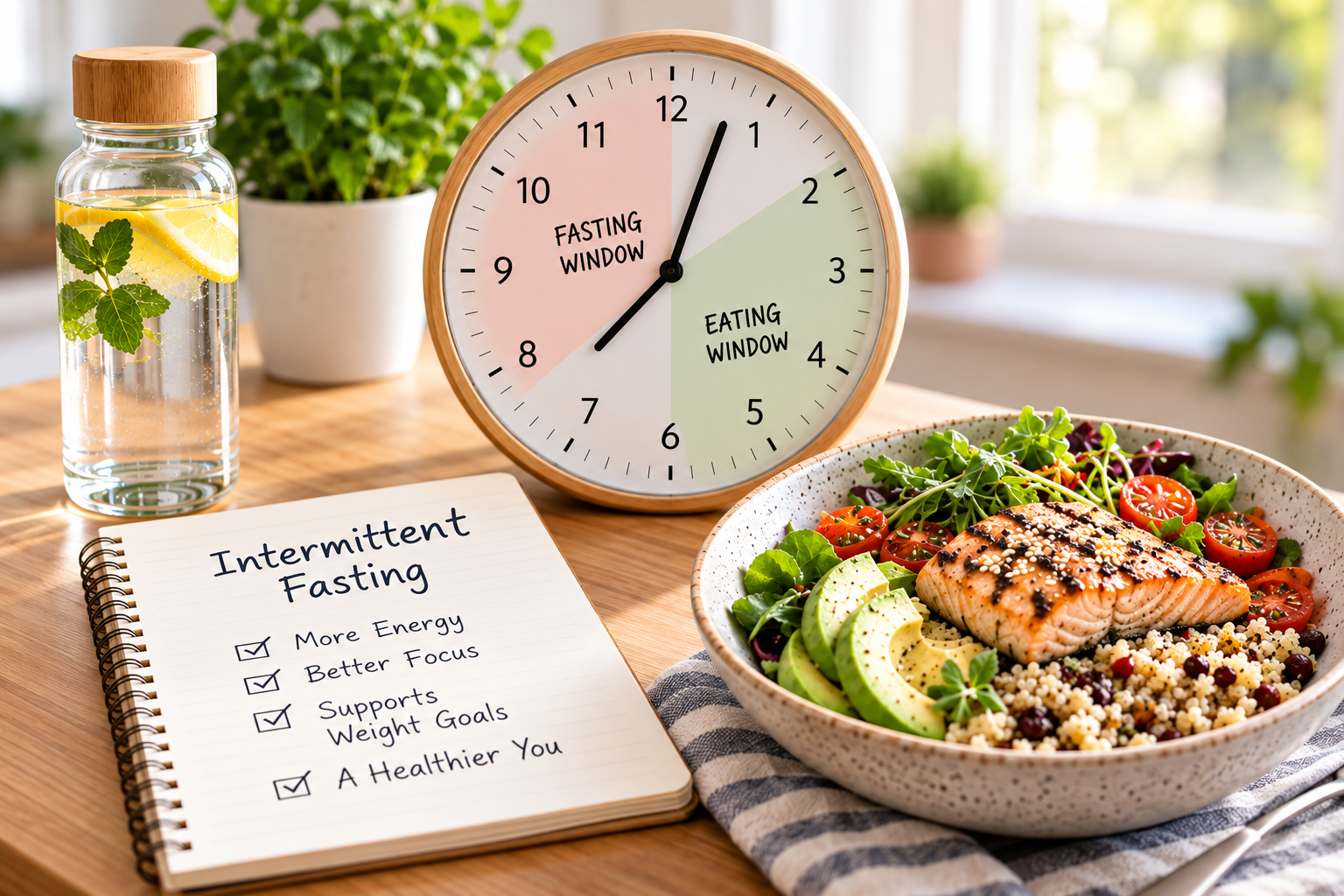
What Is Intermittent Fasting?
Intermittent fasting (IF) is simply an eating pattern that cycles between periods of eating and fasting.
Instead of focusing what to eat, it focuses more on when you eat.
Common approaches include:
- 12:12 (12 hours fasting, 12 hours eating)
- 14:10 (14 hours fasting, 10 hours eating)
- 16:8 (more advanced—not always ideal for everyone)
For many women in midlife, starting with a 12–14 hour overnight fast is both realistic and effective.
Why Intermittent Fasting Works for Fat Loss
When done correctly, intermittent fasting can support fat loss in a few key ways:
1. Improves Insulin Sensitivity
As we age, our bodies can become more insulin resistant, making fat loss harder. Fasting gives your body a break from constant insulin spikes, helping it tap into stored fat for fuel.
2. Encourages Fat Burning
During fasting periods, your body shifts from burning glucose to burning fat—especially when paired with balanced nutrition and strength training.
3. Simplifies Your Routine
Fewer eating windows often mean fewer opportunities to overeat or snack mindlessly (especially late at night).
The Cortisol Connection (Why Extreme Fasting Can Backfire)
Here’s where a lot of women go wrong…
Long fasting windows, under-eating, and over-exercising can increase cortisol, your body’s primary stress hormone.
And elevated cortisol can:
- Increase belly fat storage
- Disrupt sleep
- Lead to cravings and energy crashes
- Slow down fat loss over time
This is especially important during perimenopause and menopause, when your body is already more sensitive to stress.
👉 Translation: More is not always better when it comes to fasting.
A Smarter Approach to Intermittent Fasting for Midlife Women
Instead of pushing longer fasts, focus on consistency and balance.
Here’s what I recommend:
✔ Start with a 12-hour overnight fast
Example: Finish dinner at 7pm, eat breakfast at 7am.
✔ Gradually work up to 13–14 hours (if it feels good)
No forcing it. Your body should feel energized—not depleted.
✔ Break your fast with protein
This helps stabilize blood sugar and reduce cravings later in the day.
✔ Don’t skip meals just to “extend” a fast
If you’re hungry, your body is asking for fuel.
✔ Pair fasting with strength training
This is critical for maintaining muscle and supporting metabolism as you age.
Signs Your Fasting Routine Is Working
When intermittent fasting is supporting your body (not stressing it), you’ll notice:
- Steady energy throughout the day
- Reduced cravings
- Less bloating
- Better digestion
- Gradual, sustainable fat loss
Signs You Might Be Overdoing It
On the flip side, dial it back if you’re experiencing:
- Constant fatigue
- Trouble sleeping
- Increased belly fat
- Irritability or mood swings
- Strong cravings or overeating later in the day
These are often signs your body is under stress—not in fat-burning mode.
Intermittent Fasting Is a Tool—Not the Whole Strategy
While intermittent fasting can be incredibly helpful, it’s just one piece of the puzzle.
For real, lasting results in midlife, you also need:
- Enough protein
- Strength training
- Balanced macros
- Proper recovery
- A plan that fits your lifestyle
This is exactly what I focus on inside my program—helping women simplify fat loss without extremes.
Final Thoughts: Keep It Simple and Sustainable
If you’re feeling stuck, overwhelmed, or like you’ve tried everything…
Start here:
- Eat dinner a little earlier
- Stop late-night snacking
- Give your body a consistent overnight break
That alone can make a noticeable difference.
Not sure how to implement intermittent fasting in your life? Take this quick quiz for a detailed plan and free meal guide!
Because at this stage of life, it’s not about doing more—it’s about doing what works with your body, not against it.
Looking for a simple, proven plan to put this into action?
→ Join my FASTer Way VIP Membership
We are a participant in the Amazon Services LLC Associates Program, an affiliate advertising program designed to provide a means for sites to earn advertising fees by advertising and linking to amazon.com. Read my full disclosure here

 Whole30
 Vegetarian
 Paleo
Paleo Keto Friendly
 Gluten Free
 Dairy Free