

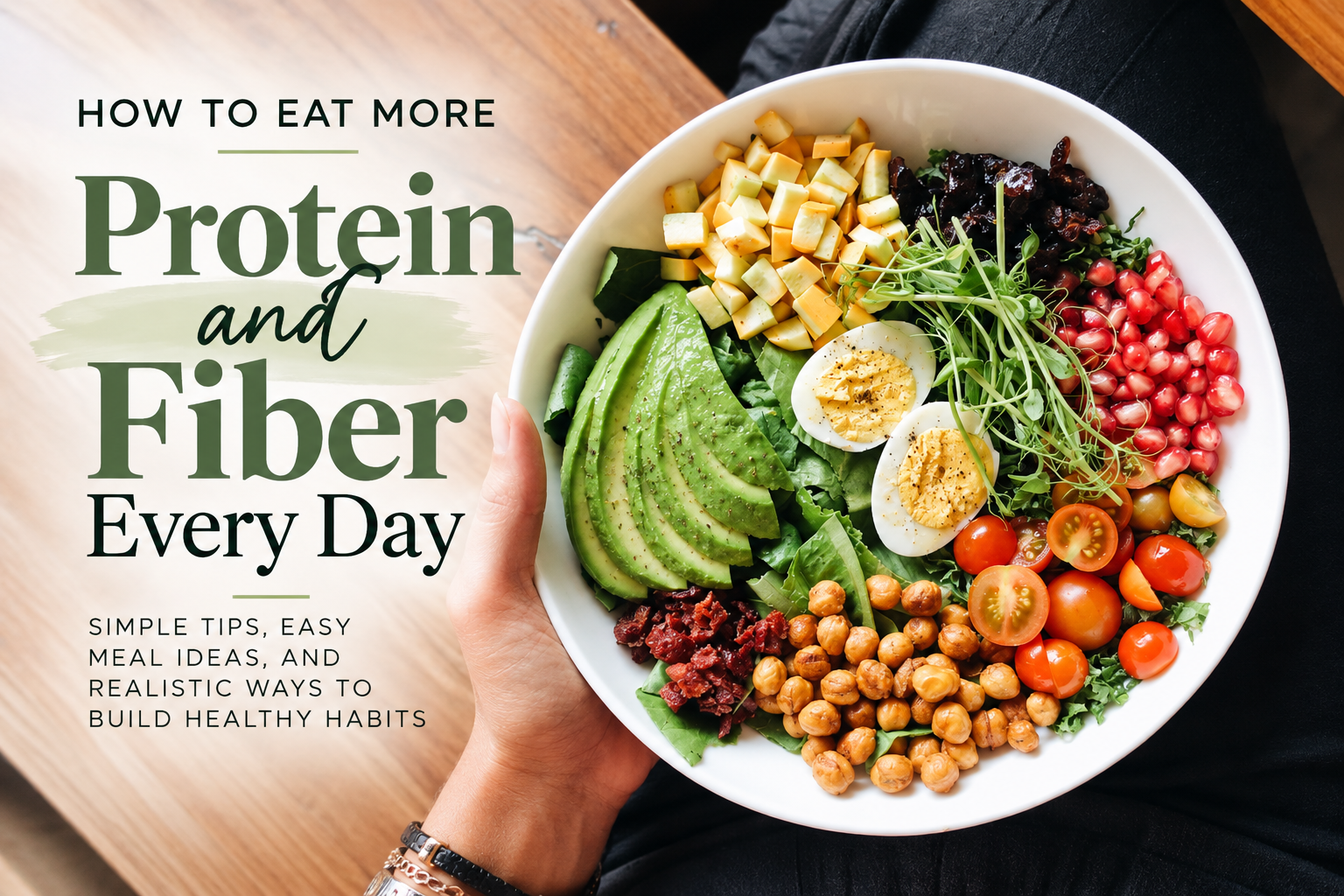
How to Eat More Protein and Fiber Every Day (10 Easy Tips)
This post may contain affiliate links. Read my full disclosure here.
How to Eat More Protein and Fiber Every Day (Without Overcomplicating It!)
If there’s one simple change that can make a big difference in how you eat, it’s this: focus on getting more protein and fiber into your meals.
These two nutrients are a powerhouse combination when it comes to staying full, supporting healthy digestion, maintaining muscle, and making balanced eating feel easier. And for women in midlife, they’re especially important.
The good news? You don’t need to follow a complicated meal plan, eliminate your favorite foods, or spend hours in the kitchen to get enough of either one.
With a few simple swaps and a little planning, you can build meals that are higher in protein and fiber using everyday foods you already enjoy.
Let’s break down why they matter, how much you need, and my favorite ways to get more of both.
Why Protein and Fiber Matter, Especially After 40
Protein and fiber each play an important role in your health, but combining them throughout the day can be especially helpful.
Protein helps you maintain and build muscle. As we age, preserving muscle becomes increasingly important for strength, mobility, and metabolic health. Getting enough protein, especially when combined with regular strength training, helps support muscle maintenance and recovery.
Protein also helps you feel satisfied after meals, making it easier to manage hunger throughout the day.
Fiber supports digestion, gut health, and healthy cholesterol levels. Certain types of fiber can also help moderate blood sugar responses and support a healthy gut microbiome.
And like protein, fiber can help with fullness, which is one reason the combination works so well.
Think about the difference between grabbing a piece of toast for breakfast versus having eggs, whole-grain toast, and berries. Both can fit into a balanced diet, but the second meal offers a combination of protein and fiber that may help keep you satisfied longer.
The goal isn’t to eat perfectly. It’s to build meals that give your body more of what it needs.
How Much Protein and Fiber Do You Need Every Day?
Your ideal intake depends on your age, body size, activity level, and personal health goals, but there are some helpful starting points.
How Much Protein Do You Need?
The standard Recommended Dietary Allowance for protein is 0.8 grams per kilogram of body weight per day for generally healthy adults. However, this is a baseline intended to meet basic needs, not necessarily the optimal amount for someone who is active or trying to maintain or build muscle.
For many healthy, active women in midlife, a daily protein intake of approximately 1.2–1.6 grams per kilogram of body weight can be a reasonable target, depending on individual needs.
For example, a woman weighing 150 pounds might aim for approximately 82–109 grams of protein per day within that range.
One of my favorite strategies is to aim for 25–35 grams of protein at each main meal, then add a protein-rich snack if needed.
Spreading protein throughout the day is often easier than trying to squeeze most of it into dinner.
How Much Fiber Do You Need?
For women ages 31–50, the recommended daily fiber intake is approximately 25 grams, while women 51 and older are generally advised to aim for about 22 grams per day, based on Dietary Reference Intakes.
Aiming for 25–30 grams can be a practical goal for many women, although individual needs and tolerance vary.
And here’s something worth remembering: if you’re currently eating very little fiber, increase it gradually. Adding too much too quickly can lead to bloating and digestive discomfort. Drink adequate fluids as you increase your intake.
10 Easy Ways to Eat More Protein and Fiber Every Day
You don’t have to completely change the way you eat. Start with a few of these simple habits and build from there.
1. Build Breakfast Around Protein
Breakfast is one of the easiest places to make a meaningful change.
Instead of relying on toast, cereal, or fruit alone, start with a protein source and add fiber-rich foods.
Some of my favorite combinations include:
- Eggs with avocado and whole-grain toast
- Plain Greek yogurt with berries and chia seeds
- Cottage cheese with fruit and ground flaxseed
- Overnight oats made with Greek yogurt and chia seeds
- A smoothie with protein powder, berries, and seeds
My tip: Aim for around 30 grams of protein at breakfast when it fits your needs. It’s a simple way to make progress toward your daily goal before lunchtime.
2. Add Beans or Lentils to Your Favorite Meals
Beans and lentils are one of my favorite ways to increase fiber because they also contribute plant-based protein.
They’re affordable, versatile, and easy to add to meals you already make.
Try adding black beans to taco bowls, white beans to chicken chili, lentils to soups, or chickpeas to salads.
My Vegetarian Lentil Chili is a great example of a comforting meal that makes it easy to enjoy more fiber.
3. Pair Protein with Fiber at Lunch
A salad with chicken is a great start, but you can make it even more satisfying by adding fiber-rich ingredients.
Start with a protein such as chicken breast, turkey, tuna, or eggs, then add beans, vegetables, fruit, or whole grains.
For example, a chicken salad with chickpeas, mixed greens, crunchy vegetables, and avocado provides a combination of protein, fiber, and healthy fats.
This approach works for wraps, grain bowls, soups, and leftovers too.
4. Keep High-Protein Foods Prepped and Ready
One of the easiest ways to eat more protein consistently is to make it convenient.
I like to prep a few basics at the beginning of the week so I can quickly build meals without starting from scratch.
Some easy options include:
- Grilled or shredded chicken breast
- Hard-boiled eggs
- Cooked ground turkey
- Plain Greek yogurt
- Cottage cheese
- Canned tuna or salmon
Pair these with fiber-rich produce, beans, or whole grains for quick lunches and snacks.
You don’t need to prep complete meals. Having a few ingredients ready to go makes a big difference.
5. Add Seeds to Foods You’re Already Eating
Chia seeds, ground flaxseed, and basil seeds can be easy ways to boost the fiber content of your meals. This easy DIY blend has it all!
Try stirring them into smoothies, oatmeal, yogurt, or overnight oats.
For example, one tablespoon of chia seeds provides approximately 4 grams of fiber, depending on the brand.
Small additions like this can add up throughout the day.
6. Choose Snacks That Offer More Than One Nutrient
Instead of reaching for something that leaves you hungry again an hour later, try pairing a protein-rich food with a source of fiber.
Some easy combinations include:
- Greek yogurt with raspberries
- Cottage cheese with sliced pear
- Hard-boiled eggs with an apple
- Hummus with vegetables
- Edamame
- A protein smoothie with berries and chia seeds
These combinations provide a mix of nutrients that can help make snacks more satisfying.
7. Make Vegetables a Bigger Part of Dinner
Vegetables aren’t just a side dish. They’re an easy way to add fiber, volume, and variety to meals.
Try adding extra bell peppers to chili, spinach to soups, zucchini to meat sauce, or roasted broccoli alongside chicken and potatoes.
You don’t have to eat enormous salads every day. In fact, lettuce, cucumbers, and carrots aren’t a great source of fiber.
Simply adding another vegetable to meals you already enjoy can help increase your overall fiber intake.
8. Choose Higher-Fiber Carbohydrates More Often
Carbohydrates can absolutely be part of a balanced diet, especially if you’re active and strength training.
Rather than eliminating carbs, focus on choosing fiber-rich options more often.
Some great choices include:
- Oatmeal
- Sweet potatoes with the skin
- Brown rice
- Whole-grain bread
- Beans and lentils
- Berries
- Apples and pears with the skin
These foods provide energy along with important nutrients and fiber.
9. Make Your Favorite Comfort Foods More Balanced
You don’t have to give up pizza, pasta, tacos, or chili to eat well.
Instead, look for simple ways to add protein and fiber.
For example:
- Add lean ground turkey and extra vegetables to pasta sauce.
- Make tacos with chicken or turkey and black beans.
- Add white beans to chicken soup.
- Serve burgers with roasted vegetables and potatoes.
- Use lentils or beans to add fiber to hearty soups and stews.
My Healthy White Chicken Chili is a perfect example. It combines chicken breast, white beans, and plenty of vegetables in one comforting, family-friendly meal.
10. Focus on Progress, Not Perfection
This might be the most important tip of all.
You don’t have to hit an exact protein or fiber number every single day to benefit from eating more of these nutrients.
If you’re currently eating 50 grams of protein and 12 grams of fiber, start by making small changes. Add protein to breakfast. Include beans with lunch. Choose fruit with your afternoon snack.
Consistency matters much more than perfection.
What Does a High-Protein, High-Fiber Day of Eating Look Like?
Here’s an example of how you can build a full day of meals around protein and fiber without relying on complicated recipes or restrictive eating.
| Meal | Example | Protein | Fiber |
|---|---|---|---|
| Breakfast | 2 eggs, plain Greek yogurt, raspberries, chia seeds | 30g | 10g |
| Lunch | Chicken and chickpea salad with mixed vegetables | 35g | 9g |
| Snack | Cottage cheese and an apple | 15g | 4g |
| Dinner | Turkey taco bowl with black beans, vegetables, and brown rice | 35g | 10g |
| Daily total | 115g | 33g |
Nutrition values are approximate and depend on portions and ingredients. This is an illustrative meal plan, not a prescribed calorie target.
Notice that none of these meals are especially complicated. They’re built around familiar foods, with protein and fiber included throughout the day.
Do You Need to Track Protein and Fiber?
Not necessarily!
Tracking your food for a short period can be helpful if you’re curious about how much protein or fiber you’re actually eating. Many people are surprised to discover that they’re getting less than they thought.
But you don’t need to track every bite forever.
Once you become familiar with which foods provide protein and fiber, it gets easier to build balanced meals naturally.
A simple approach is to include a protein source at each meal, add fiber-rich produce or whole grains, and incorporate beans, lentils, or seeds regularly.
Frequently Asked Questions
Can eating more protein and fiber help with weight loss?
Protein and fiber can both help support fullness, which may make it easier to manage hunger and maintain a calorie intake that supports your goals. Protein also helps preserve muscle during weight loss, particularly when combined with resistance training.
Neither nutrient guarantees weight loss on its own, but both can be useful parts of a sustainable approach.
What’s the difference between Soluble and Insoluble Fiber?
Both types of fiber are important for gut health, but they work differently. Soluble fiber dissolves in water to form a gel-like substance that helps regulate blood sugar, lower cholesterol, and keep you feeling full. You’ll find it in oats, beans, apples, and chia seeds. Insoluble fiber adds bulk to stool and helps keep digestion regular. Good sources include whole grains, nuts, seeds, and vegetables.
Bottom line: Aim for a variety of fiber-rich whole foods each day to get the benefits of both!
Is it better to eat protein or fiber first?
You don’t need to prioritize one over the other. Both play important roles in a balanced diet. Focusing on including them together throughout the day is a practical strategy.
Can I eat too much fiber?
Yes. Increasing fiber too quickly can cause bloating, gas, or abdominal discomfort. Gradually increasing your intake and drinking enough fluids can help.
People with certain digestive conditions, including active inflammatory bowel disease or intestinal narrowing, may need individualized fiber recommendations.
What foods are high in both protein and fiber?
Beans, lentils, chickpeas, and edamame are especially useful because they naturally contain both protein and fiber.
You can also create protein-and-fiber combinations by pairing foods such as Greek yogurt with berries, chicken with beans, or eggs with whole-grain toast and avocado.
Do protein powders count toward my daily protein goal?
Yes! Protein powder can be a convenient way to supplement your intake, especially on busy days. However, whole-food protein sources also provide vitamins, minerals, and other nutrients, so I recommend building most meals around a variety of minimally processed foods.
The Bottom Line: Start with Protein + Fiber
Eating more protein and fiber doesn’t have to be complicated. In fact, some of the most effective nutrition habits are also the simplest.
Start with protein at breakfast. Add beans or vegetables to meals you already make. Keep easy protein options ready in the refrigerator. Choose fiber-rich carbohydrates and snacks more often.
These small, repeatable habits can help support strength, digestive health, and a more satisfying way of eating—especially during midlife.
And remember, healthy eating doesn’t have to mean giving up the foods you love. It’s about finding a balance that works for you and that you can maintain long-term.
Want more support with building healthy habits in midlife? Through my FASTer Way coaching, I help women focus on strength, balanced nutrition, and sustainable routines that fit real life. Learn more about FASTer Way and how to get started.
We are a participant in the Amazon Services LLC Associates Program, an affiliate advertising program designed to provide a means for sites to earn advertising fees by advertising and linking to amazon.com. Read my full disclosure here

 Whole30
 Vegetarian
 Paleo
 Keto Friendly
 Gluten Free
 Dairy Free
